
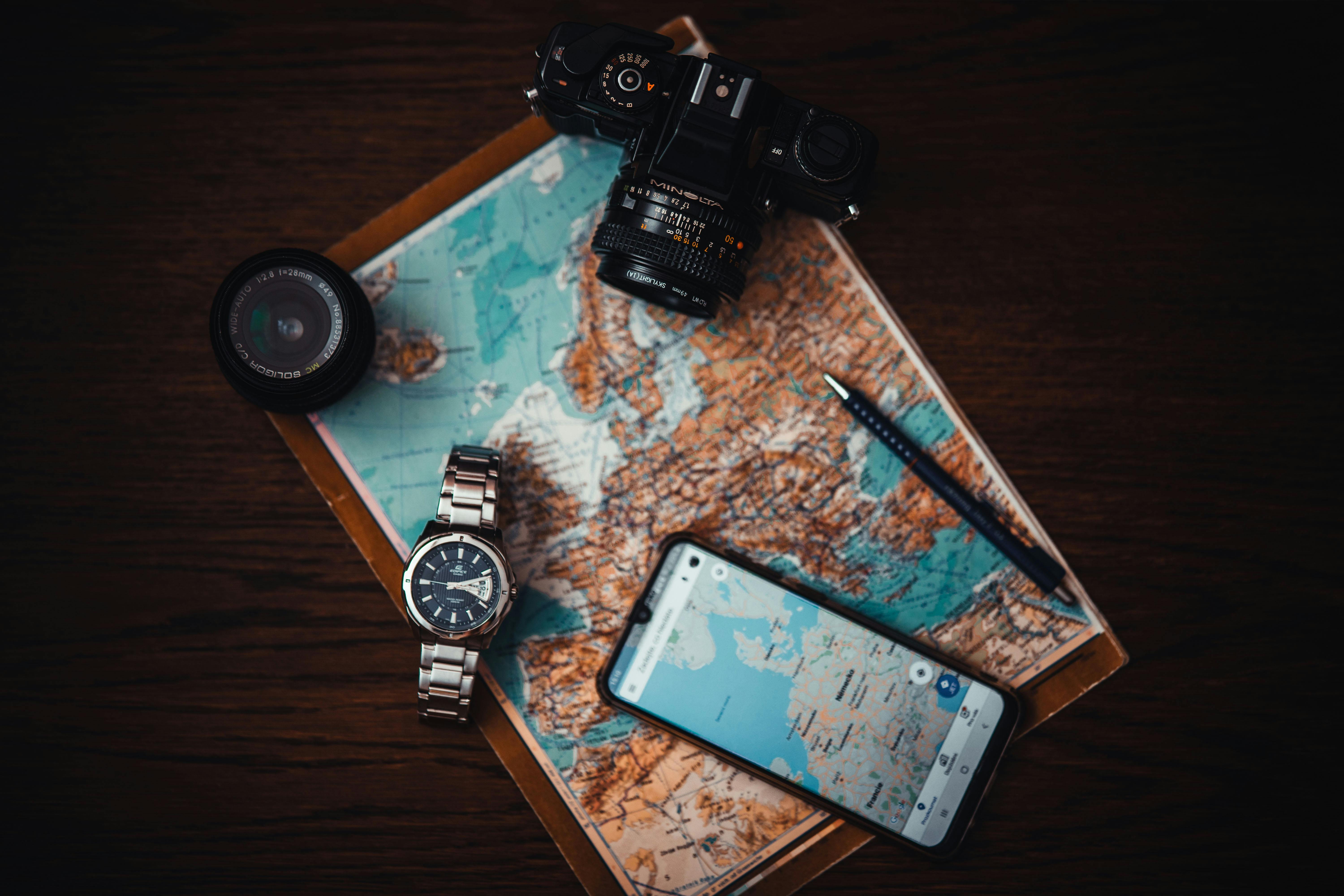
Downloading a map before arriving changes more than the phone bill. It alters which parts of a city a traveller is willing to enter and how they move between them.
Connection anxiety narrows the route
A traveller unsure whether their phone will work tends to stay on main streets, near recognisable landmarks and within reach of somewhere familiar.
That caution is reasonable but it produces a narrow experience, since the areas worth finding are frequently the ones that are hard to describe or locate.
Removing the dependency changes the calculation, and travellers with offline maps consistently wander further from their accommodation.
Offline data behaves differently from online maps
A downloaded map holds the base geography and points of interest but usually lacks live transport times, traffic and recent business changes.
Search also works differently, matching against stored records rather than a live index, so recently opened places may not appear at all.
Understanding what is missing prevents the more common failure, which is trusting an offline map for the one function it cannot perform.
Positioning still works without a network
Satellite positioning is received rather than requested, so a phone can determine its location with no mobile signal or data connection whatsoever.
What a connection normally provides is faster initial positioning and correction from nearby networks, so the first fix offline may take longer.
This distinction is not widely understood, and it is why travellers frequently assume location tracking has failed when it is simply still acquiring.
Battery becomes the binding constraint
Continuous positioning and a bright screen consume power quickly, and a phone used for navigation all day will not last one.
Because the map is now doing the work a paper one used to, running out of charge has a larger consequence than it did before.
Carrying a battery pack is therefore part of the same decision, and checking a route before setting out reduces how much continuous use is needed.
Marking points before departure does most of the work
Saving locations while still connected turns a general map into a personal one, and those markers remain available regardless of connectivity afterwards.
Marking the accommodation, the station and a few fixed points gives a frame of reference that makes unplanned exploring far less risky.
The preparation takes a few minutes and converts the map from a lookup tool into something closer to local knowledge held in advance.