
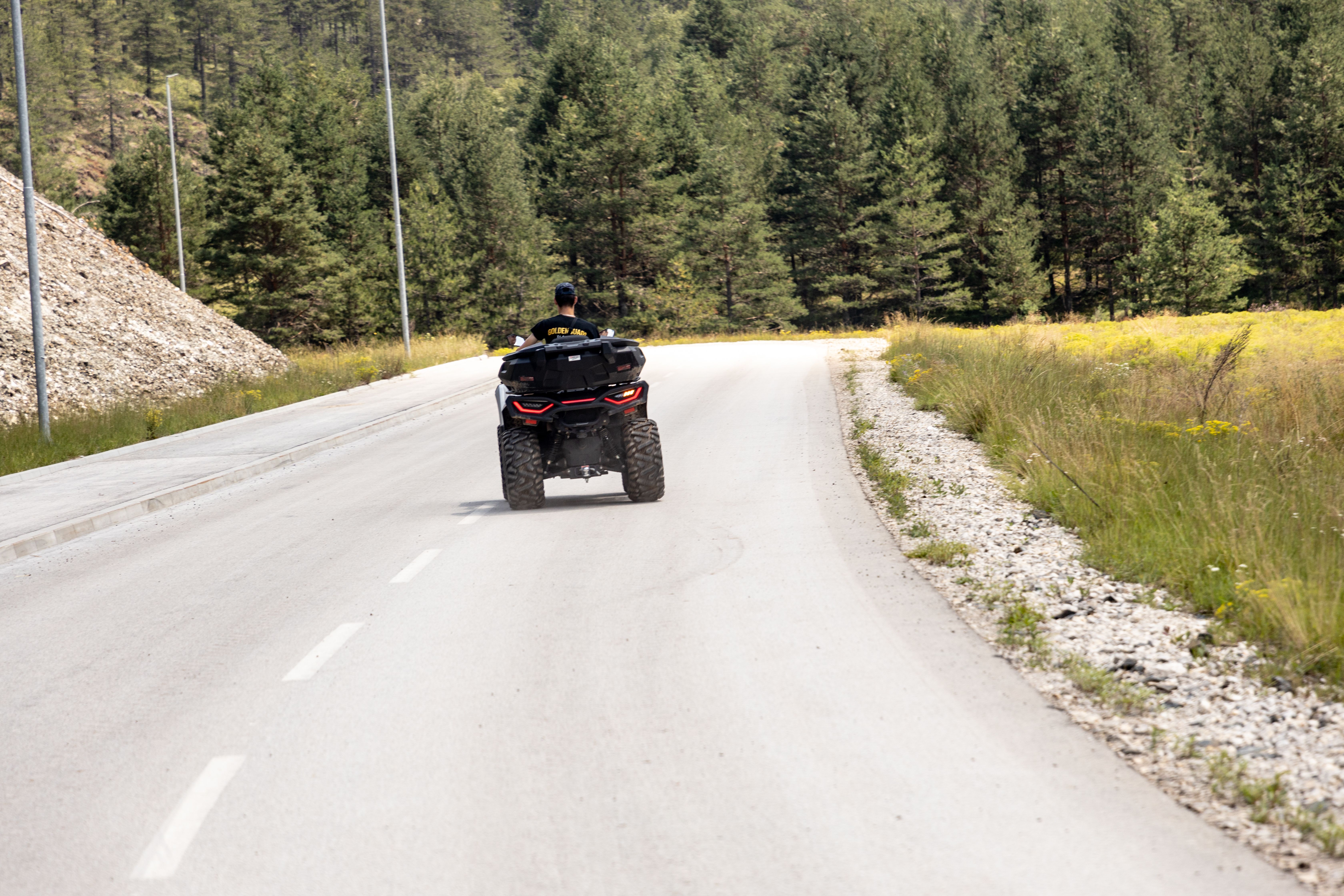
On an unsealed road the distance covered in a day can be a third of what the same hours would produce on tarmac. Surface affects progress more than any other single factor.
Safe speed falls sharply on loose surfaces
Grip on gravel is considerably lower than on sealed road, which lengthens braking distances and reduces how much steering input a vehicle can accept.
Corrugations, the regular ripples that form across well-used gravel, cause a vehicle to skip and lose contact with the surface at higher speeds.
Drivers respond by slowing, and the resulting average is often half what the road's nominal limit would permit.
Tyre damage is the common failure
Sharp stones cut sidewalls, and a sidewall cut cannot be repaired at the roadside in the way a tread puncture sometimes can.
Lowering tyre pressure improves comfort and grip on gravel but increases the risk of damage at speed, so the adjustment has to match the pace.
Carrying two usable spares on remote unsealed routes is standard practice, and it reflects how often a single spare proves insufficient.
Dust changes what the driver can see
A vehicle ahead raises a dust plume that can obscure the road completely, and overtaking into it is among the more serious risks on these roads.
Dust also hangs in still conditions, so a vehicle that passed some time earlier can still be affecting visibility.
Drivers therefore leave larger gaps than on sealed road, which further reduces the effective speed of any group travelling together.
Fatigue accumulates faster
Continuous vibration, constant steering correction and higher concentration make unsealed driving considerably more tiring per hour than sealed driving.
The effect is gradual and easy to underestimate, particularly on a long straight road where the demand feels low but never stops.
Planning shorter days with earlier stops is the usual response, and it is why experienced routes through remote country look conservative on a map.
Condition varies with weather and maintenance
A gravel road graded recently can be faster than a poorly maintained sealed one, while the same road after rain may be impassable to two-wheel drive.
Local road condition reports are the reliable source, since maps show the route but not its current state, and closures can be imposed at short notice.
Checking these on the morning of travel rather than at the planning stage matches how quickly conditions on these roads actually change.